Okinawa's Environmental Crisis — The Numbers Don't Lie
Over 70% of Okinawa's coral reefs have experienced bleaching. Every year, more than 10 million visitors flock to these beautiful islands, and that beauty is slowly fading. But change is beginning.
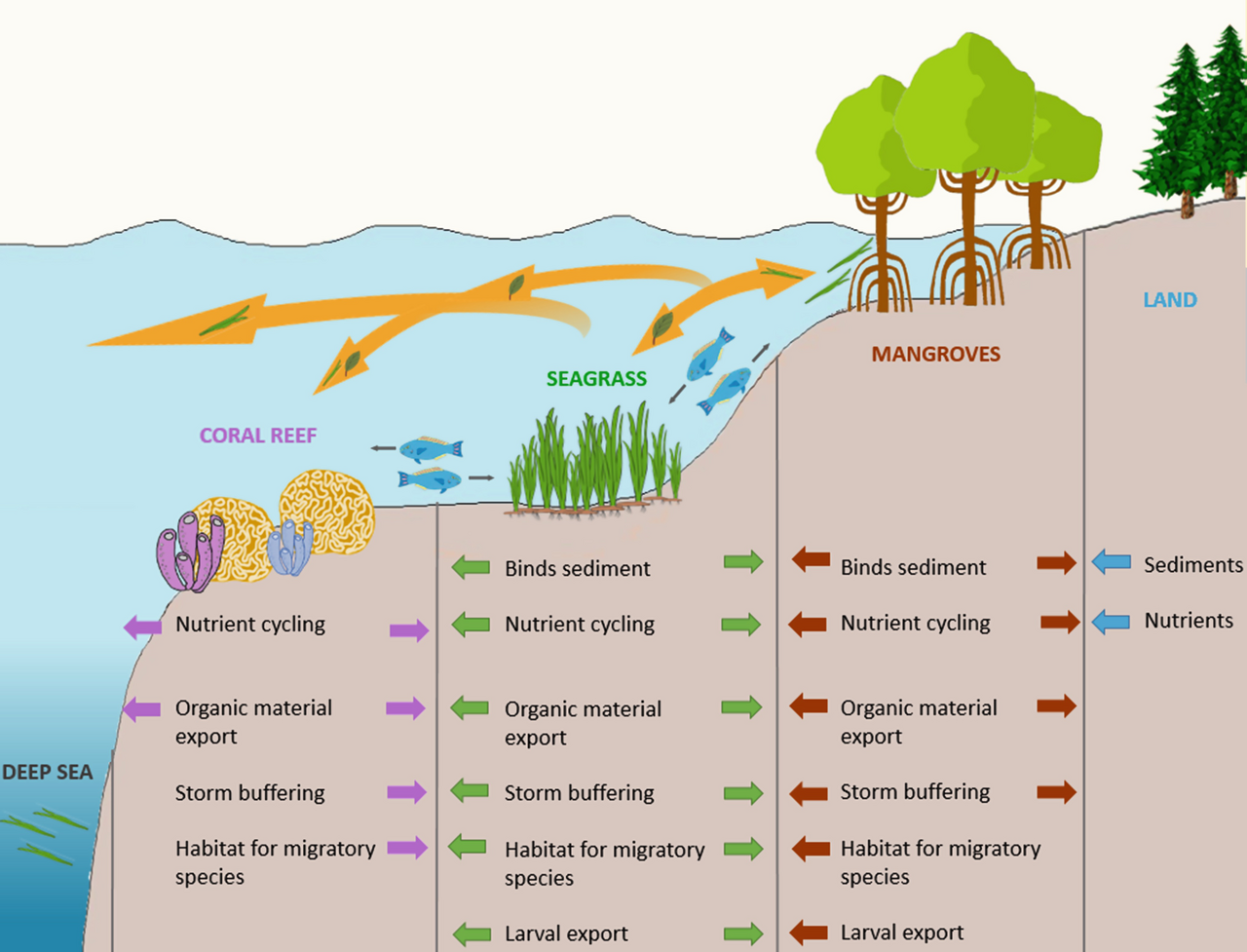
According to Japan's Ministry of the Environment, coral coverage around Okinawa has plummeted from roughly 50% in the 1990s to just 15 to 25% today. The causes are compounding: rising sea temperatures trigger mass bleaching events, agricultural runoff and wastewater degrade water quality, and overtourism inflicts direct physical damage on fragile reef systems.
In the Kerama Islands, thousands of incidents of snorkelers touching coral are reported annually. Research has shown that oxybenzone-based sunscreens entering the water can reduce coral larvae survival rates by more than 50%.
There is good news, too. Okinawa Prefecture launched a full-scale coral reef restoration project in 2024 and will introduce an accommodation tax in 2026 to fund environmental conservation. Every traveler's choices can shape the future of these islands.
2026 Accommodation Tax — What Travelers Need to Know
Okinawa Prefecture will introduce its accommodation tax starting in FY2026. Officially called the "Okinawa Prefectural Accommodation Tax" (沖縄県宿泊税), the revenue will fund tourism infrastructure and environmental conservation.
Accommodation Tax Rate Structure
| Room Rate Per Night | Tax Amount |
|---|---|
| Under 5,000 yen | Exempt |
| 5,000 to under 20,000 yen | 200 yen (~$1.30 USD) |
| 20,000 to under 50,000 yen | 500 yen (~$3.30 USD) |
| 50,000 yen and above | 1,000 yen (~$6.60 USD) |
The tax is collected at check-in and applies to all accommodation types — hotels, guesthouses, ryokan, and Airbnb rentals. Collected funds flow into Okinawa's Tourism Environment Improvement Fund, financing beach maintenance, coral reef conservation, and overtourism countermeasures.
Real-world impact for travelers: For a 2-night stay at a 15,000-yen-per-night hotel, you'll pay an additional 400 yen total (about $2.60 USD). A small amount, but one that goes directly toward preserving the very landscape you came to see.
How to Protect Coral Reefs — Ocean Etiquette for Every Traveler
The single most impactful thing you can do is use reef-safe sunscreen. Many dive and snorkeling operators in Okinawa now recommend or require sunscreens free of oxybenzone and octinoxate — two chemicals proven to accelerate coral bleaching and kill coral larvae.
Reef-Safe vs. Conventional Sunscreen
| Feature | Reef-Safe | Conventional |
|---|---|---|
| Coral Impact | Harmless | Accelerates bleaching, kills larvae |
| Active Ingredients | Zinc oxide, titanium dioxide | Oxybenzone, octinoxate |
| Price Range | 2,000-3,000 yen | 500-1,500 yen |
| Where to Buy | Naha drugstores, dive shops | Anywhere |
Five Golden Rules for Snorkeling and Diving
- Never touch or stand on coral — Coral is a living animal. Even a brief touch strips its protective mucus layer, leaving it vulnerable to infection and disease.
- Watch your fin kicks — Careless kicks near the seabed are one of the leading causes of physical coral damage from tourists.
- Do not feed marine life — Feeding disrupts natural feeding behavior and alters the entire ecosystem balance.
- Master your buoyancy before entering the water — Practice in a pool or shallow area first so you never need to rest on the ocean floor.
- Take all waste with you — A single plastic bag can be lethal to sea turtles that mistake it for jellyfish.
Top 5 Eco-Activities in Okinawa
1. Mangrove Kayaking (Bisha River / Nago)
Cost: 5,000-7,000 yen | Duration: 2-3 hours | Difficulty: Beginner-friendly
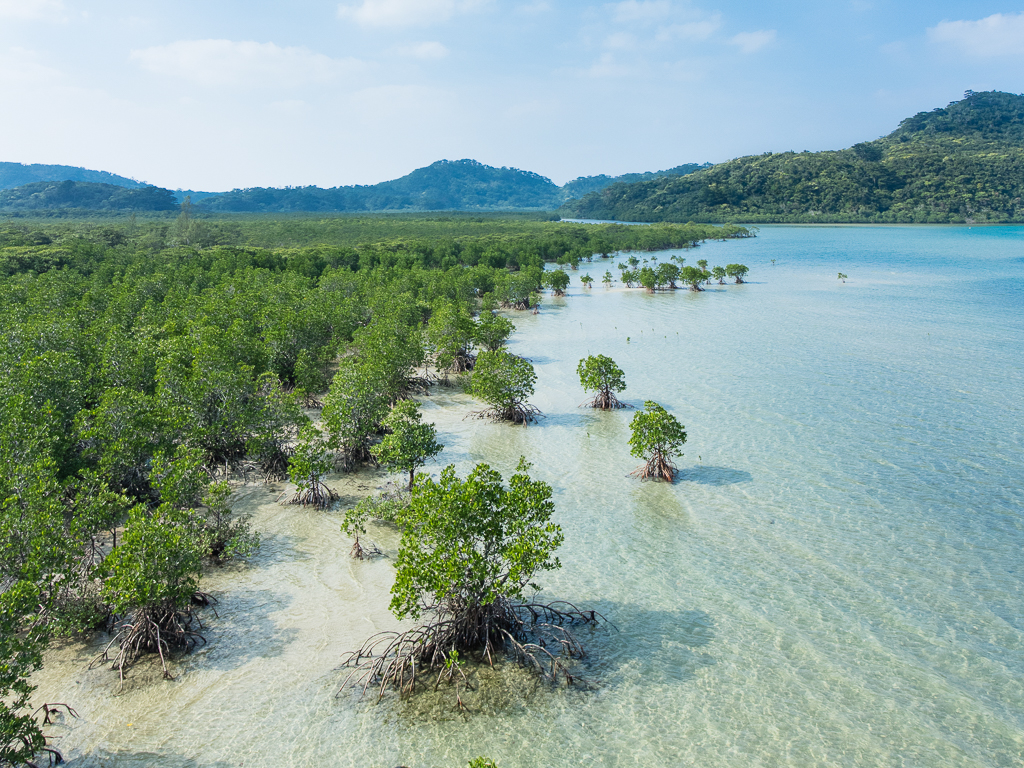
Paddle through lush mangrove forests along the Bisha River (比謝川) or Gesashi River (慶佐次川). Guides explain the local ecosystem as you glide through tunnels of subtropical greenery. With no motor and zero emissions, kayaking is the ultimate low-impact adventure. At low tide, you can also observe tidal flat creatures up close.
2. Beach Cleanup Tours (Various Locations)
Cost: Free to 2,000 yen | Duration: 1-2 hours | Difficulty: Anyone welcome
Join local NPOs in organized shoreline debris collection. These are not simple trash pickups — they are educational programs that trace the journey of ocean waste and explain its impact on marine ecosystems. Families are especially welcome, and children often find it eye-opening.
3. Coral Planting Experience (Onna Village / Zamami)
Cost: 8,000-12,000 yen | Duration: 3-4 hours | Difficulty: Must be able to snorkel
Physically plant nursery-raised coral fragments onto the reef. Some operators let you attach a name tag to your coral and track its growth via underwater camera updates long after you've returned home. This is an experience truly unique to Okinawa — you leave the ocean in better shape than you found it.
4. Yanbaru Forest Trekking (Kunigami Village)
Cost: 6,000-10,000 yen | Duration: 3-5 hours | Difficulty: Moderate
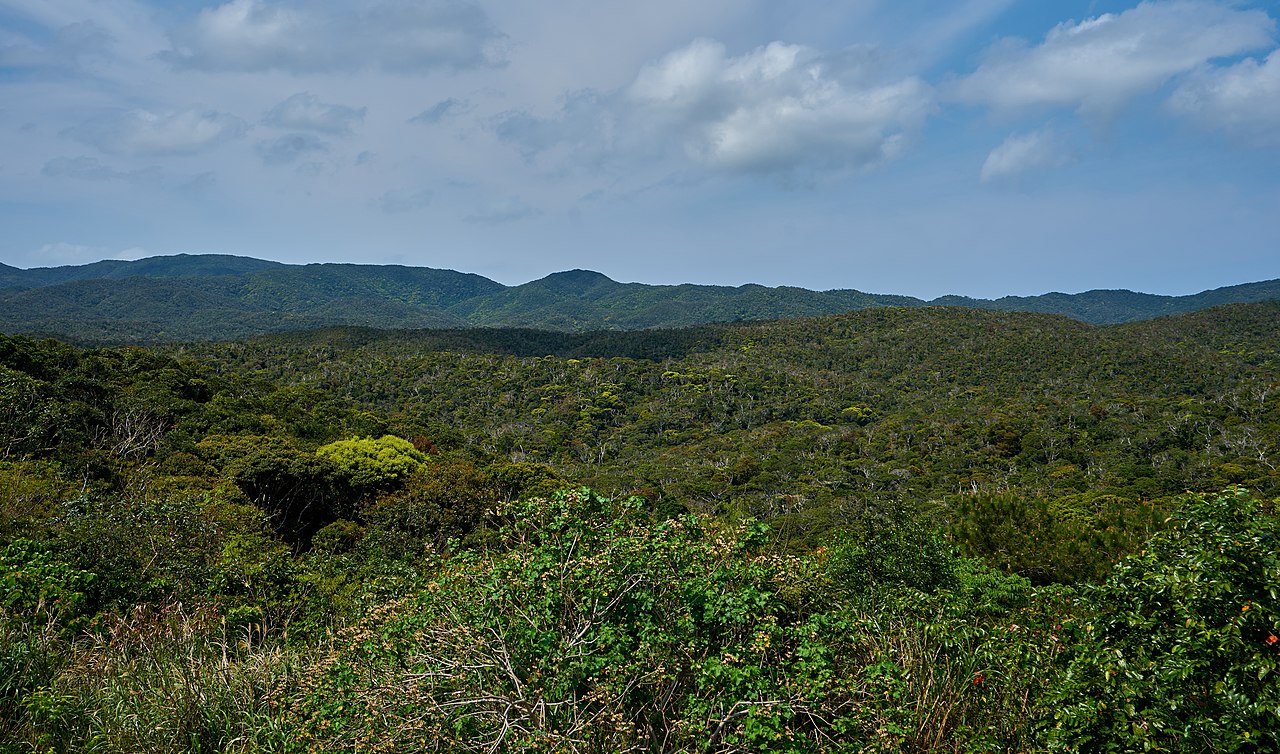
Explore the UNESCO World Natural Heritage Yanbaru forest with a certified nature guide. The forest is home to the Okinawa rail (Yanbaru kuina), the Okinawa woodpecker (Noguchi-gera), and other endemic species found nowhere else on Earth. Core protection zones require a guide — you literally cannot enter without one, ensuring minimal human impact.
5. Stargazing Tours (Ishigaki / Miyako)
Cost: 3,000-5,000 yen | Duration: 1.5-2 hours | Difficulty: Anyone welcome
The remote islands of Ishigaki and Miyako have minimal light pollution, making them ideal for observing the Southern Cross and the Milky Way. Expert guides provide constellation narratives, and tours use minimal artificial lighting to protect nocturnal wildlife — a true dark-sky experience.
Sustainable Accommodation and Farm-to-Table Dining
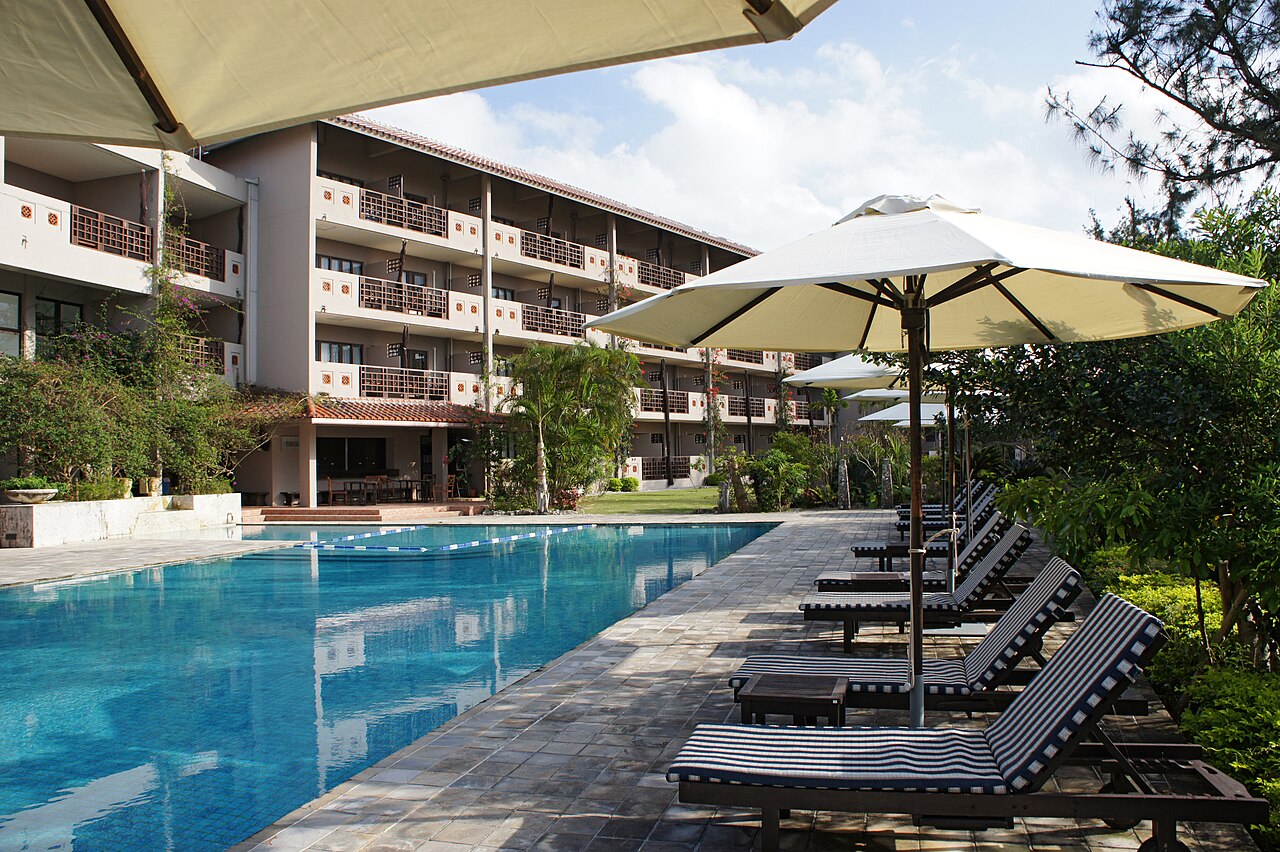
How to Choose an Eco-Friendly Stay
Look for these markers when booking sustainable accommodation in Okinawa:
- Renewable energy use — Solar panels, wind power, or other clean energy sources on-site
- Single-use plastic reduction — Refillable amenity dispensers, no plastic straws or bottles
- Local food sourcing — Farm-to-table breakfast using Okinawan-grown produce
- Water conservation — Rainwater harvesting systems, low-flow fixtures
- Community employment — High percentage of local staff, contributing to the regional economy
Recommended Eco-Friendly Stays
| Property | Location | Highlights | Price Range |
|---|---|---|---|
| HOSHINOYA Okinawa | Yomitan | Nature-circulation resort, beach conservation programs | 50,000 yen+ |
| Treeful Treehouse | Nago | Treehouse stays, zero-waste operations | 15,000 yen+ |
| Canac Small Guesthouse | Motobu | Local produce breakfast, refillable amenities | 8,000 yen+ |
Farm-to-Table Restaurants
Dining at farm-to-table restaurants that use Okinawa-grown ingredients is one of the simplest ways to travel sustainably. You reduce food miles, support local farmers directly, and taste food at its absolute freshest.
- Cookhal — Nago. Direct-from-farm produce restaurant with an open kitchen concept and rotating seasonal menus.
- Cafe Garamanjyaku — Yaese. Organic vegetable-focused dishes in a tranquil countryside setting.
- Payao Fish Market Restaurant — Naha. Seafood delivered directly from local fishermen, as fresh as it gets.
Yanbaru UNESCO World Natural Heritage
In July 2021, the forests of northern Okinawa were inscribed as a UNESCO World Natural Heritage Site alongside Amami-Oshima, Tokunoshima, and Iriomote Island. Officially titled "Amami-Oshima, Tokunoshima, Northern Part of Okinawa Island, and Iriomote Island," the designation recognizes this region as a globally significant biodiversity hotspot.
Yanbaru by the Numbers
| Metric | Detail |
|---|---|
| Year Inscribed | July 2021 |
| Total Area | Approximately 7,721 hectares (northern Okinawa section) |
| Notable Endemics | Okinawa rail (Yanbaru kuina), Okinawa woodpecker (Noguchi-gera), Okinawa spiny rat |
| Plant Species | Over 1,000 species (subtropical evergreen broadleaf forest) |
| IUCN Red List Species | 95+ endangered species within the habitat |
The Okinawa Rail — A Miracle of Conservation
The Okinawa rail (Yanbaru kuina, ヤンバルクイナ) was discovered in 1981 and is a flightless bird endemic to Japan — it exists nowhere on Earth except the Yanbaru forests of northern Okinawa. Its population once crashed to just 700 individuals, but dedicated conservation efforts — including mongoose eradication programs and road-kill prevention fencing — have brought the count back to approximately 1,500 birds.
Spotting tips: Early morning (5-7 AM) along roads in Kunigami Village offers the best chances. Slow your vehicle, keep quiet, and never approach on foot — just observe from a respectful distance.
Responsible Traveler Checklist
Here is your complete sustainability checklist for Okinawa travel, organized by phase. Print it, screenshot it, or bookmark this page.
Before You Leave
- Buy reef-safe sunscreen — Confirm it contains no oxybenzone or octinoxate. Mineral-based (zinc oxide / titanium dioxide) is the standard.
- Pack a reusable water bottle and eco-bag — Minimize single-use plastic from day one.
- Book eco-certified accommodation — Prioritize properties with demonstrated environmental commitments.
- Pre-book eco-tours with certified guides — Smaller groups, better experience, lower impact.
During Your Trip
- Never touch coral or marine life — No exceptions, no matter how gentle you think you're being.
- Stay on designated trails — Especially in Yanbaru and other protected natural areas.
- Take all your trash with you — Even from beaches. Leave nothing behind.
- Eat at local-sourcing restaurants — Direct support for Okinawa's agricultural communities.
- Use public transport when possible — The Yui Rail monorail and bus networks reduce your carbon footprint.
- Minimize beach lighting at night — Okinawa's beaches are sea turtle nesting grounds. Artificial light disorients hatchlings.
After You Return
- Share your sustainable travel experience — Social media posts and blog entries raise awareness far beyond your own trip.
- Donate to coral conservation organizations — Even small contributions make a tangible difference.
Frequently Asked Questions
Q. Can I buy reef-safe sunscreen locally in Okinawa?
A. Yes. Drugstores along Naha's Kokusai Street (Matsumoto Kiyoshi, Don Quijote) and virtually all dive shops stock reef-safe options. Look for the Japanese label "サンゴに優しい" (gentle on coral). Expect to pay 1,500 to 3,000 yen.
Q. Does the accommodation tax apply to children?
A. School trip participants and preschool children are exempt. Children of elementary school age and above are taxed at the same rate as adults, based on the per-night room charge.
Q. Can I visit Yanbaru Forest without a reservation?
A. General walking trails are open to everyone. However, core protection zones (Special Protection Areas) require a certified guide. Sites like Daisekirinzan accept walk-ins, but for deep-forest trekking tours, advance booking is strongly recommended — spots fill up, especially on weekends and holidays.
Q. Can children participate in coral planting?
A. Most operators accept children aged 6 and above who can snorkel. A guardian must accompany them. The planting takes place in shallow water (1-3 meters deep), so it is safe for young participants.
Q. Are eco-tours more expensive than regular tours?
A. Slightly, in most cases. The premium covers certified guide fees, small group sizes, and environmental conservation contributions. However, the quality of experience is dramatically higher than mass-market group tours, and the negative environmental impact is minimized. Most participants consider the difference well worth it.