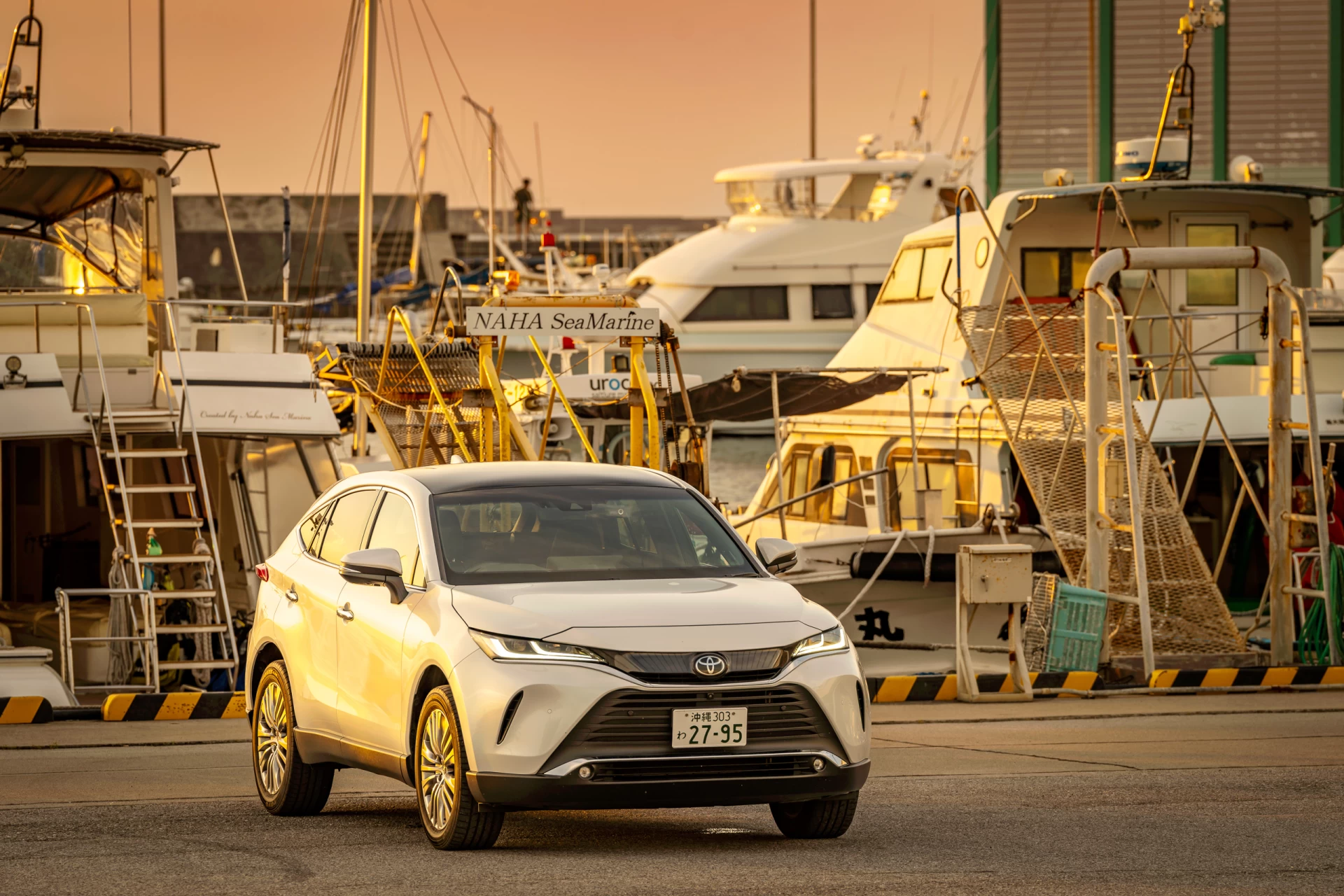
What Is Koza? — Okinawa's Second-Largest City and Music Capital
Koza is the former name of Okinawa City and a nickname locals still use with pride. Located in central Okinawa, the city has a population of roughly 140,000, making it the second-largest city in Okinawa after Naha. After World War II, Koza boomed around the US military's Kadena Air Base, and a unique blend of Japanese, American and Asian influences gave birth to what locals call "champuru (mix) culture." During the 1960s and 70s, Koza served as an R&R (rest and recreation) hub for troops during the Vietnam War. Its nightlife exploded, and rock, jazz and soul music took deep root, earning the city the lasting nickname "Music City."

Koza's appeal is nothing like Naha's Kokusai Street. While Naha bustles with mainstream tourists, Koza retains an authentic local heartbeat. American diners that arrived with the military, traditional Okinawan culture, and Asian influences from neighbouring countries coexist in a single alley. This distinctive streetscape is one of Okinawa's best-kept hidden gems.
Gate Street — Where America Meets Okinawa
Gate Street (Gate-dori) runs from Kadena Air Base Gate 2 into the heart of Koza. Along its roughly 600-metre stretch, American restaurants, bars, vintage shops, tattoo parlours and military surplus stores line both sides. Signs are written in English and Japanese, and walking the street you will see US military personnel and Okinawan residents mingling as part of everyday life.
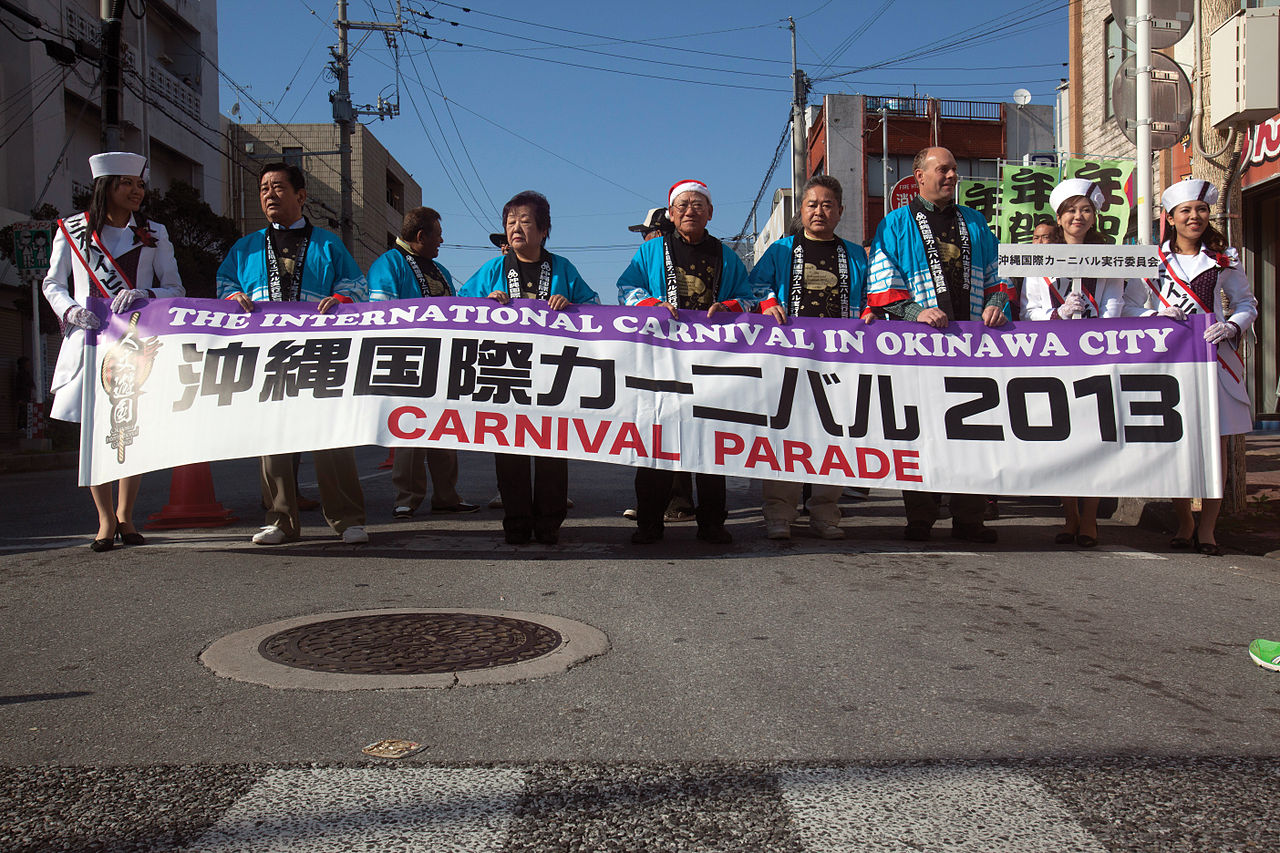
The atmosphere shifts dramatically by time of day. Daytime brings shoppers hunting for vintage clothing and military surplus goods, while after dark, live music bars fill the air with rock and blues in a retro American mood. During the annual International Carnival, the entire length of Gate Street becomes a pedestrian zone packed with tens of thousands of visitors.
- Location: starts at Kadena Air Base Gate 2
- Vibe: English signage, American diners, vintage shops, live bars
- Best time: daytime for shopping, evenings for live music
- Parking: paid lots nearby (about 200 yen/hour)
Music Town and Music Culture — Birthplace of Okinawan Rock
Music Town Oto-ichiba opened in 2007 as Koza's landmark cultural complex. The first floor houses a cafe and tourist information centre, the second floor has music-related shops and studios, and the third floor features a large live hall seating approximately 1,100 that hosts performances year-round. The building's soaring atrium symbolises Koza's musical energy.
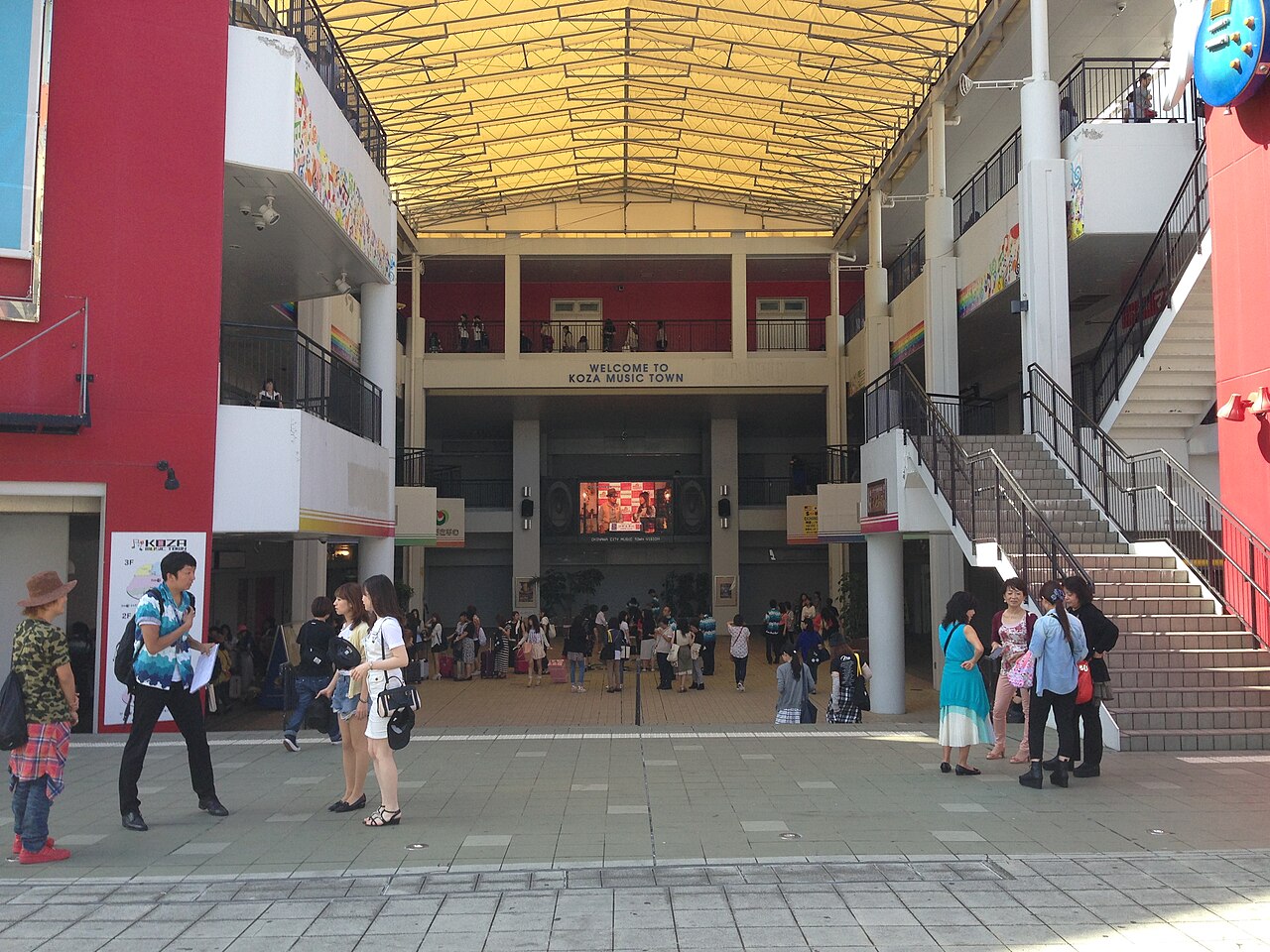
Koza is called the "birthplace of Okinawan rock." In the 1960s and 70s, Okinawan musicians playing clubs around Kadena Base for American audiences absorbed rock 'n' roll, soul and R&B, forging a distinctive sound. Legendary musicians like Kise Shoichi launched their careers in Koza, and that tradition lives on today. More than 10 live houses still operate around Gate Street and Center Park Avenue, and on weekend nights you can catch passionate sets by local bands.
- Music Town Oto-ichiba: 1F tourist info, 3F live hall (~1,100 seats)
- Hours: 10:00-22:00 (varies by facility)
- Admission: building free; performances require separate tickets
- Live houses: 10+ around Gate Street, cover charge about 1,000-3,000 yen
Historical Spots — Plaza House and the Memory of the Koza Riot
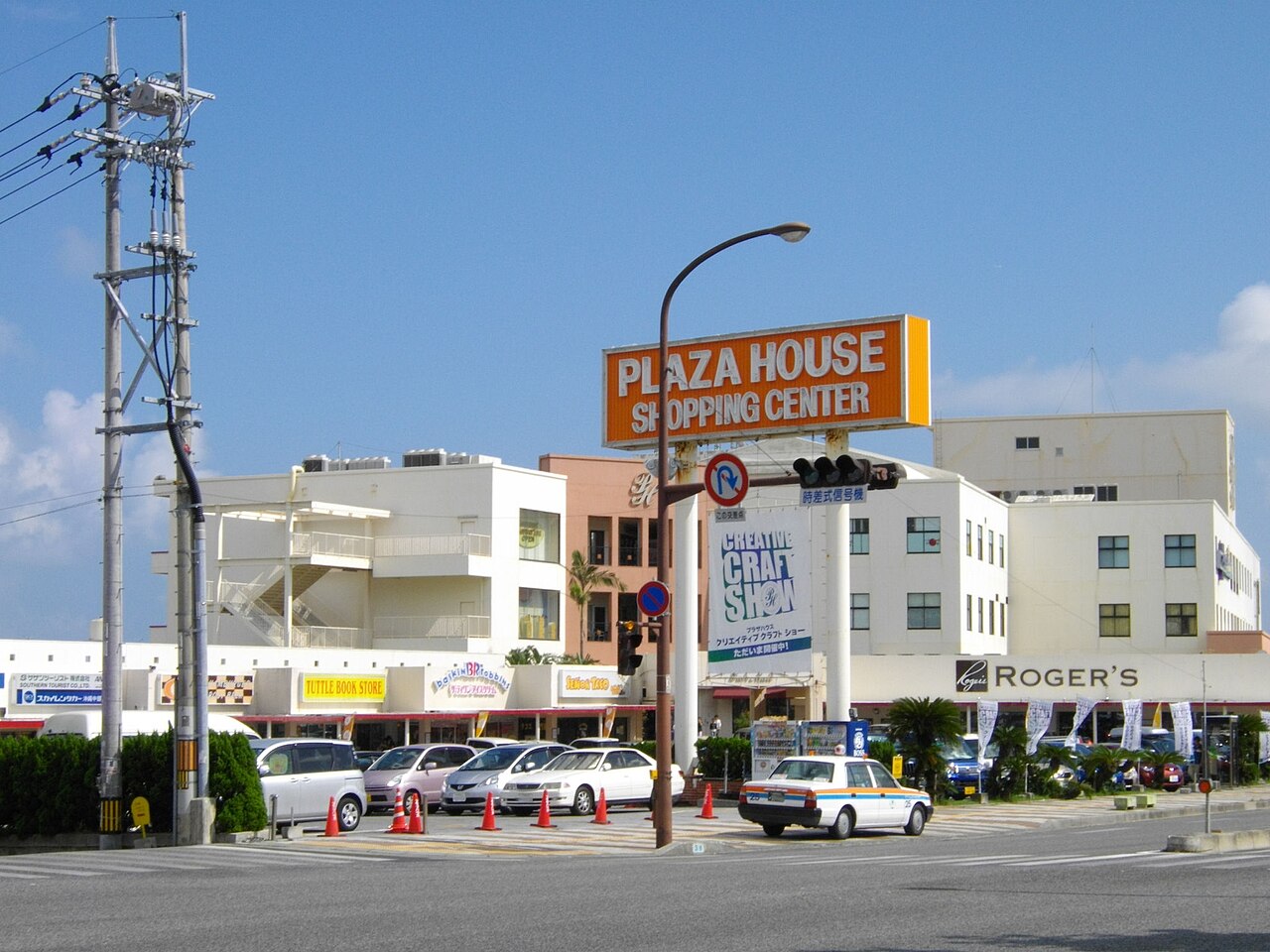
Plaza House Shopping Center opened in 1954 as Okinawa's first shopping centre built for foreign residents. Created for US military families, the building introduced department-store-style shopping to Okinawa, stocking imported goods and premium brands. At the time, Okinawans saw it as "America itself." Still in operation today, Plaza House preserves its retro charm with cafes, general stores and galleries.
No account of Koza's history is complete without the 1970 Koza Riot. On December 20, 1970, a traffic accident involving a US military vehicle on Koza's streets ignited pent-up frustrations among Okinawan residents. Around 80 military vehicles were set ablaze and protests reached the gates of Kadena Air Base. The incident became a turning point in the Okinawa reversion movement and contributed to Okinawa's return to Japan on May 15, 1972. Today, the Histreet exhibition space in central Koza preserves and displays that history.
| Historical Spot | Description | Visiting |
|---|---|---|
| Plaza House | 1954 — Okinawa's first foreign-oriented department store | Free, 10:00-20:00 |
| Histreet | Koza history and culture exhibition space | Free, 11:00-19:00 |
| Gate Street | Site of the 1970 Koza Riot | Open (street) |
| Kadena Lookout | Runway views from Michi-no-Eki Kadena | Free, 8:00-22:00 |
Eisa and the International Carnival — When Koza Comes Alive
Okinawa City is the heartland of Eisa, the dynamic drumming dance of Okinawa. Every year on the weekend immediately after Obon in August, the All-Island Eisa Festival takes over the city. Launched in 1956, this festival brings together Eisa troupes from roughly 30 community youth groups across Okinawa — the island's largest Eisa event. Performances continue late into the night on the special stage at Koza Athletic Park, drawing crowds of about 300,000.
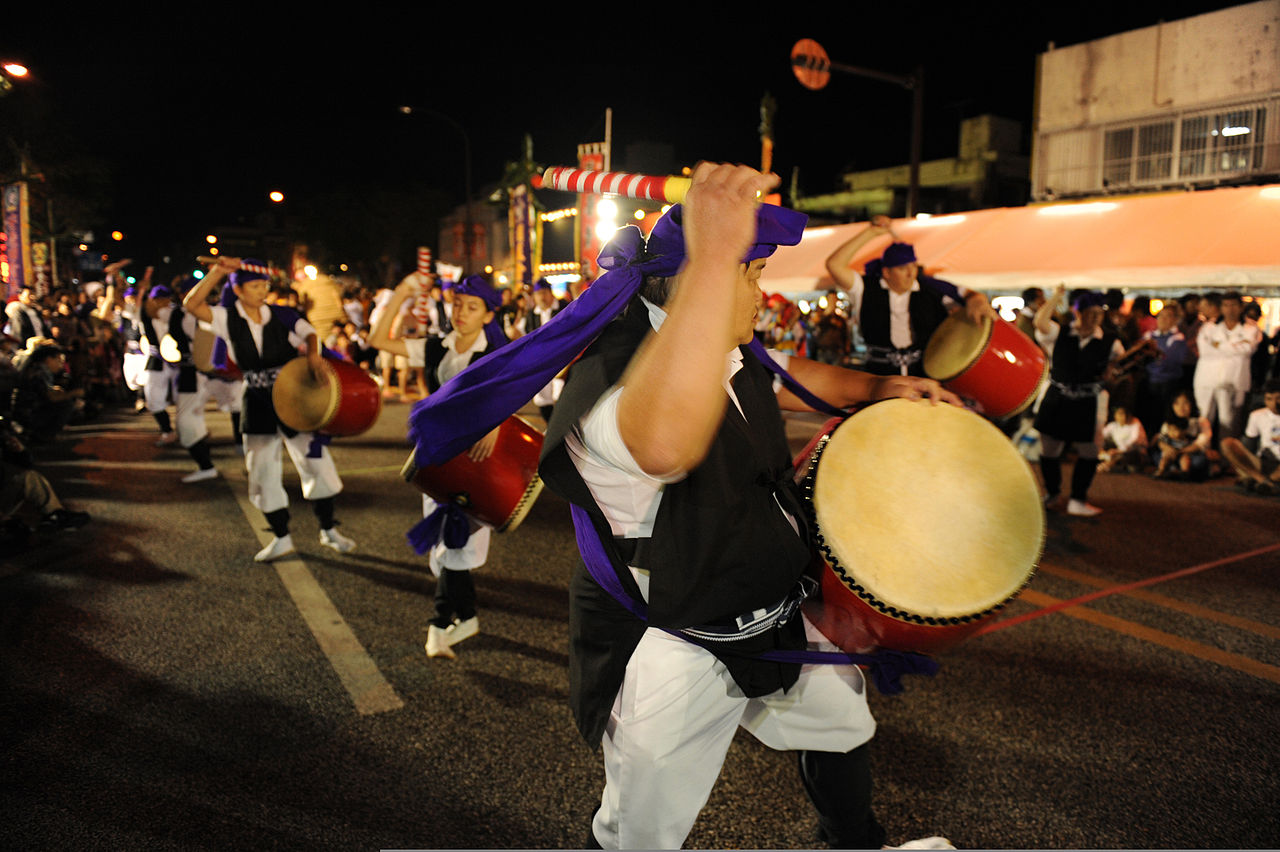
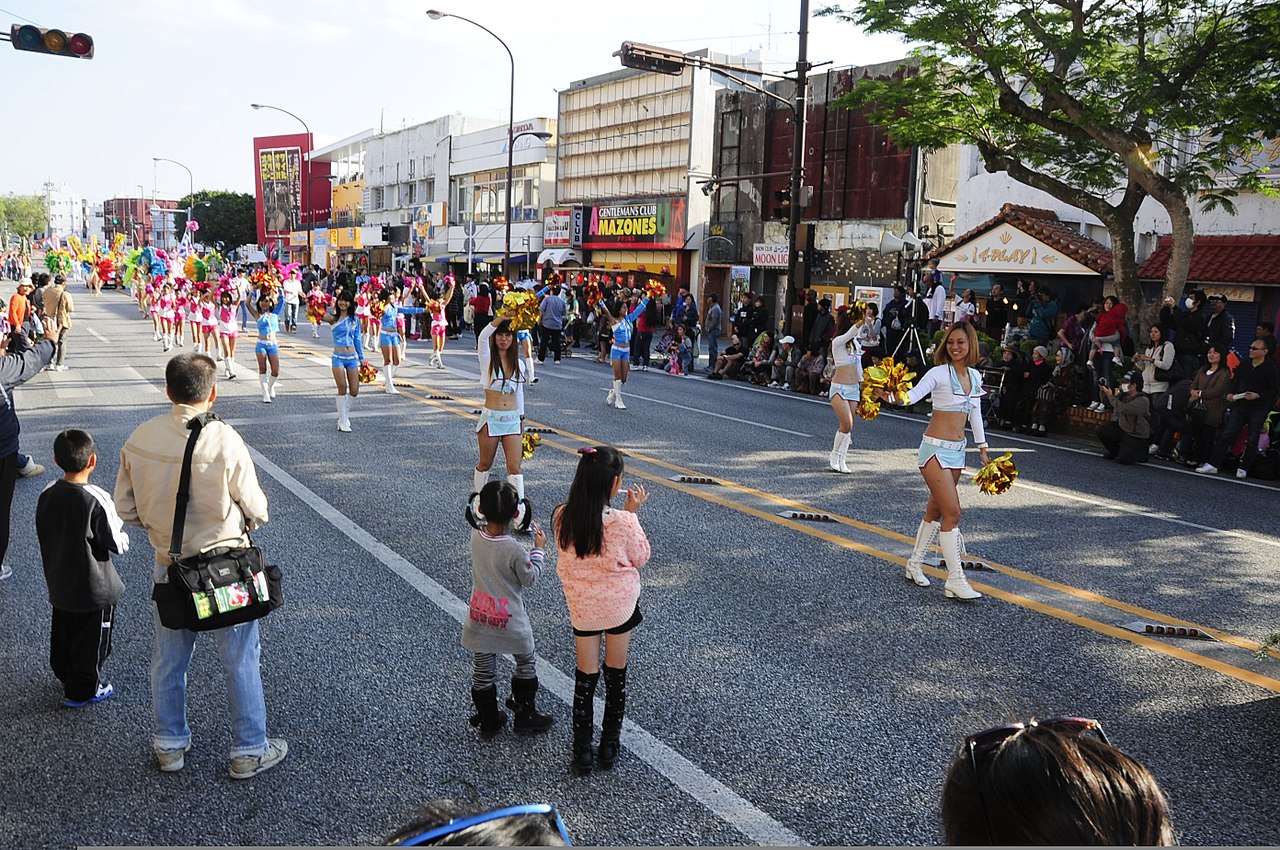
Alongside the Eisa festival, Koza's other signature event is the Okinawa International Carnival. Held every November around the Gate 2 Street area, it is a multicultural celebration co-created by Kadena base personnel and local residents. American-style parades, Eisa processions, international food booths and live music merge together, offering the best opportunity to experience Koza's champuru culture firsthand.
- All-Island Eisa Festival: Fri-Sun, 3 days after Obon in August, Koza Athletic Park, free admission, ~300,000 visitors
- International Carnival: 2 days in November weekend, Gate 2 Street area, free admission
- Eisa Night: every Friday in July-August, Eisa parades through Koza streets
Koza Food — Tacos, Taco Rice and Live Music Dining
Koza is also the birthplace of Okinawa's taco and taco rice culture. Charlie's Tacos, which opened in 1956 to serve American servicemembers, is Okinawa's oldest taco restaurant with over 60 years of history. The taco rice born in Koza — seasoned ground beef, cheese, lettuce and salsa over white rice — later spread across Okinawa and eventually mainland Japan, becoming one of the island's most iconic B-grade dishes.
| Restaurant | Signature Dish | Price Range | Notes |
|---|---|---|---|
| Charlie's Tacos | Original tacos | ~500-800 yen | Est. 1956, Okinawa's oldest taco shop |
| A&W Koza | Root beer, Mozza burger | ~600-1,000 yen | Okinawa's iconic fast food |
| Gate Street bars | Cocktails + live music | ~1,000-3,000 yen | Weekend rock & jazz nights |
| Koza soba shops | Okinawa soba | ~500-700 yen | Local favourites |
- Charlie's Tacos: est. 1956, Koza branch near Gate Street, hours 11:00-20:00
- A&W: chain-wide across Okinawa, but the Koza branch has a distinct base-town atmosphere
- Live music dining: enjoy a meal and a show together — a uniquely Koza experience
Access and Tips — Getting the Most out of Koza
Koza is about 40 minutes by car or roughly one hour by bus from Naha. A rental car is most convenient, but bus access is perfectly feasible. The recently opened Okinawa Arena is within walking distance of Koza, making it easy to combine a B-League basketball game or concert with a Koza sightseeing day.
_2021.jpg)
| Transport | Route | Duration | Cost |
|---|---|---|---|
| Rental car | Naha → Route 58 / expressway → Okinawa City | ~40 min | Expressway toll ~600 yen |
| Bus #23 | Naha BT → Goya intersection | ~60 min | ~750 yen |
| Bus #31 | Naha BT → Koza | ~55 min | ~750 yen |
Suggested Half-Day Itinerary
- 10:00 — Visit Plaza House Shopping Center (retro shops and cafe)
- 11:30 — Lunch at Charlie's Tacos
- 13:00 — Explore Music Town Oto-ichiba (pick up info at the 1F tourist desk)
- 14:00 — Walk Gate Street (vintage shops, military surplus stores)
- 15:30 — Koza history exhibits at Histreet
- 17:00 — Root beer and a break at A&W

- Best time to visit: August (All-Island Eisa Festival), November (International Carnival)
- Time needed: half day to full day (all day recommended during Eisa festival)
- Parking: Music Town underground lot (200 yen/hour), Plaza House free lot
- Combo trip: pair with Chatan American Village (~15 min by car)
Frequently Asked Questions
Q. Where is Koza?
A. In Okinawa City, located in central Okinawa. It is the island's second-largest city after Naha, roughly 40 minutes by car from Naha.
Q. Can I enjoy Koza for free?
A. Yes. Walking Gate Street, visiting Music Town's lobby and watching the Eisa festival are all free. Plaza House and the Histreet exhibition are also free to enter.
Q. When is the All-Island Eisa Festival?
A. It is held over three days (Friday to Sunday) on the weekend right after mid-August Obon. Exact dates vary each year, so check the Okinawa City Tourism Association website.
Q. Can I get there without a rental car?
A. Yes. Take bus #23 or #31 from Naha Bus Terminal — about 60 minutes to the Goya intersection. Gate Street is a 5-minute walk from the bus stop.
Q. Is Koza family-friendly?
A. Yes. Plaza House, Music Town and the International Carnival are all great for families. Note that the bar and club area along Gate Street has an adults-oriented atmosphere at night, so daytime visits are recommended when travelling with young children.