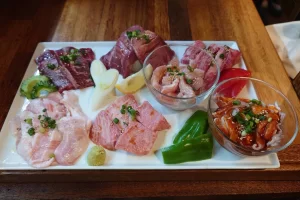
Okinawan cuisine exists in a world entirely its own, distinct from mainland Japan. Centuries of trade with China and Southeast Asia during the Ryukyu Kingdom era, post-war American military influence creating fusion soul food, and the healthy ingredients that made Okinawa one of the world's five Blue Zones — all of this comes together on a single table as "champuru," meaning the culture of mixing. This guide introduces 15 must-try Okinawan dishes with their history, flavors, prices, and the best places to eat them.

What Is Champuru Culture? — The DNA of Okinawan Food
"Champuru" is an Okinawan dialect word meaning "something mixed," derived from the Malay/Indonesian word "campur." It's not just the name of a stir-fry dish — it symbolizes Okinawa's very identity, a blend of Ryukyuan, Chinese, Japanese, Southeast Asian, and American cultures.
Five key ingredients define Okinawan cooking: pork (there's a saying: "we eat every part of the pig except its squeal"), shima-dofu (island tofu with 1.3x more protein and 3x the weight of mainland tofu), seaweed (Okinawa produces 99% of Japan's mozuku), goya (bitter melon rich in vitamin C and beta-carotene), and beni-imo (purple sweet potato). These ingredients form the foundation of the longevity diet that made Okinawa one of the world's five Blue Zones.
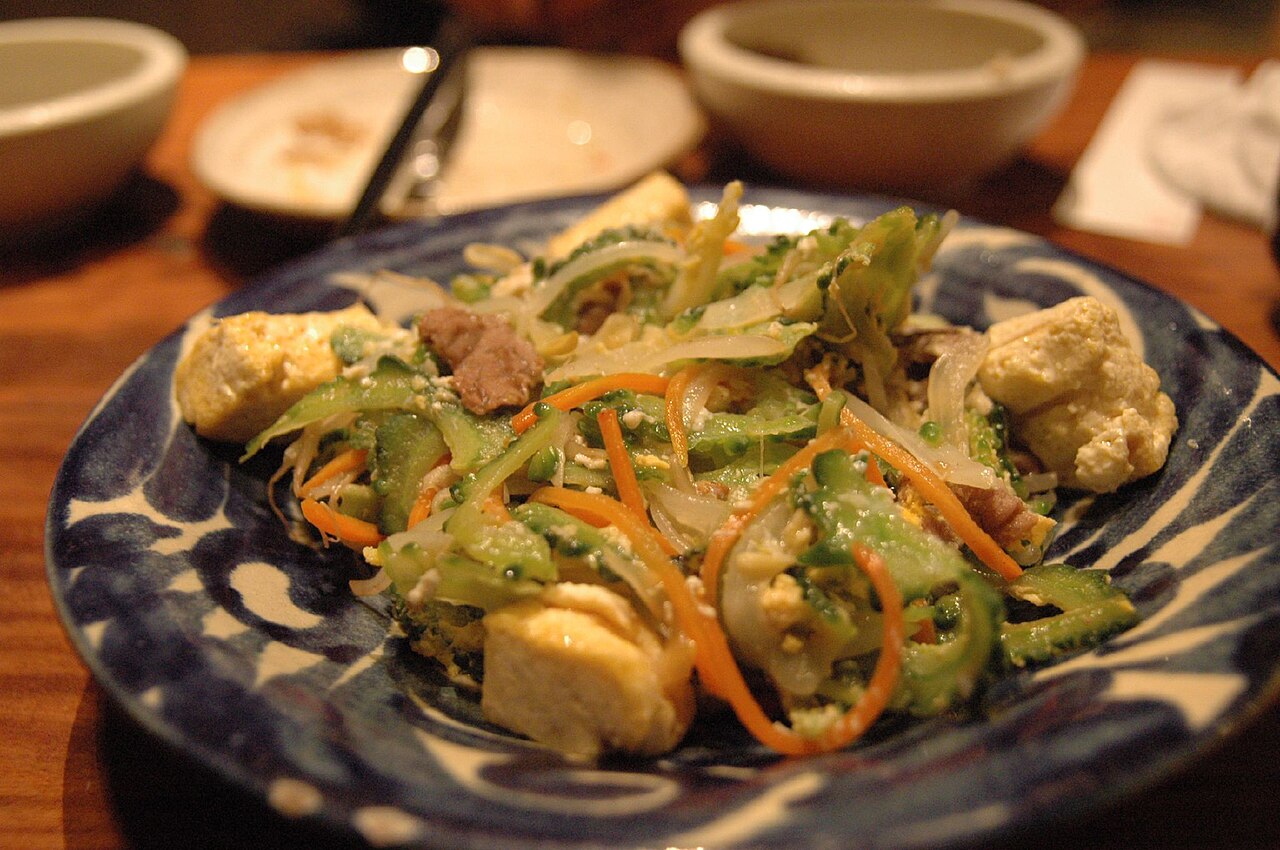
The signature champuru dish, goya champuru, combines separately stir-fried bitter melon, island tofu, eggs, and pork (or SPAM), finished with bonito flakes. The interplay of bitterness, richness, and saltiness is extraordinary. Available at virtually every Okinawan restaurant. 700–1,000 yen.
The World of Okinawa Soba — The Art of Noodles and Broth
Despite its name, Okinawa soba contains absolutely no buckwheat. It's made with 100% wheat flour noodles in a pork bone and bonito broth, topped with braised pork belly (san-mai niku), kamaboko fish cake, and green onions. The name "soba" was officially permitted after a 1978 agreement with Japan's Fair Trade Commission.
Each region has its own style: Naha serves wide, slightly curly noodles; Yaeyama uses thin, straight noodles with finely shredded meat and pipachi pepper; Miyako uniquely hides toppings under the noodles; and Motobu is famous for its "Soba Street" with over 70 specialized shops.
Soki soba swaps the pork belly for spare ribs (soki). The nankotsu soki (soft-bone) version, where the cartilage melts from slow braising, is especially popular. Regular soba costs 600–1,000 yen; soki soba is 50–300 yen extra.

Taco Rice — The Soul Food Born on a Military Base
Taco rice was invented in 1984 by Matsuzo Gibo at King Tacos in Kin Town, right outside Camp Hansen US Marine base. After Okinawa's reversion to Japan in 1972, exchange rate shifts drove American soldiers away from local eateries. Gibo's solution: put taco fillings on rice instead of in a shell.
Seasoned ground beef, shredded cheese, lettuce, and tomatoes on a bed of white rice, drizzled with salsa. Cheap (500–800 yen) and filling, it became wildly popular with students and soldiers alike, and is now served at drive-ins and restaurants across Okinawa. For the original, visit King Tacos Kin main branch.

Everything Pork — From Rafute to Mimiga
Okinawa has a saying: "We eat every part of the pig except its squeal." This philosophy is rooted in the Chinese concept of "irui horui" — the belief that eating a specific animal part benefits the corresponding human body part.
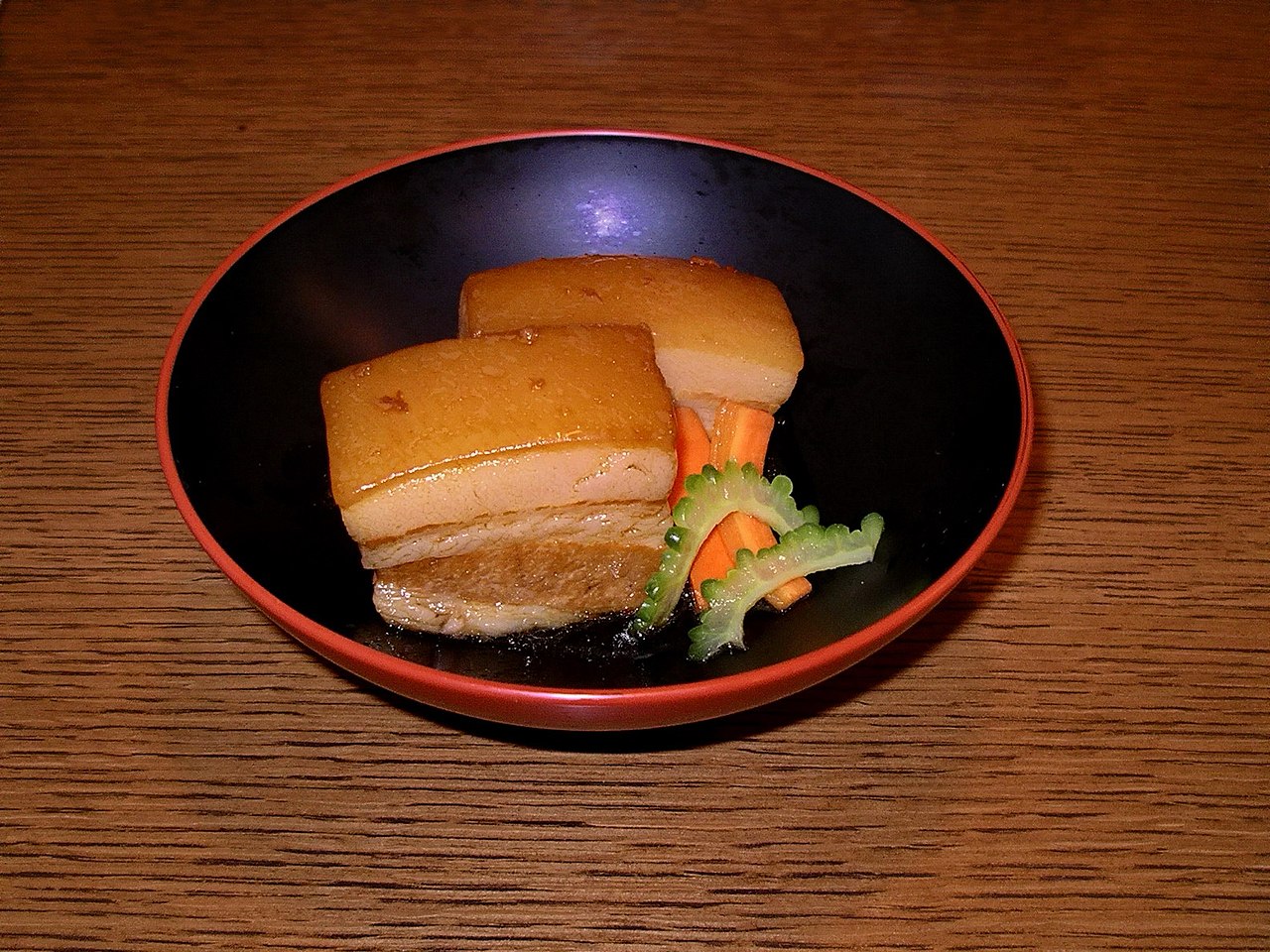
The most celebrated pork dish is rafute: pork belly slow-braised for over 2 hours in awamori, Okinawan black sugar, and soy sauce. Descended from Chinese dongpo rou, it features gelatinous skin, melt-in-your-mouth fat, and a glossy glaze — an essential dish at celebrations since the Ryukyu Kingdom era. 400–1,000 yen per serving at izakayas.
Beyond rafute, there's mimiga (sliced pig ear in vinegar), ashitibichi (braised pig's feet), and chi-irichi (stir-fried pig's blood) — Okinawan food culture wastes nothing.
Gifts from the Sea and Island Snacks — 5 Picks
Umi-budo (sea grapes), known as "green caviar," is a seaweed with tiny 1–2mm bubbles that pop on your tongue, releasing a burst of ocean flavor. Never refrigerate them — cold collapses the bubbles. Dip in sauce on the side (don't pour it over) to preserve the texture. 500–700 yen.
Jimami tofu is made from peanuts, not soybeans, despite the name "tofu." It has a sweet, creamy, pudding-like texture. Peanut allergy warning — tourists have been hospitalized with anaphylaxis after unknowingly eating it.
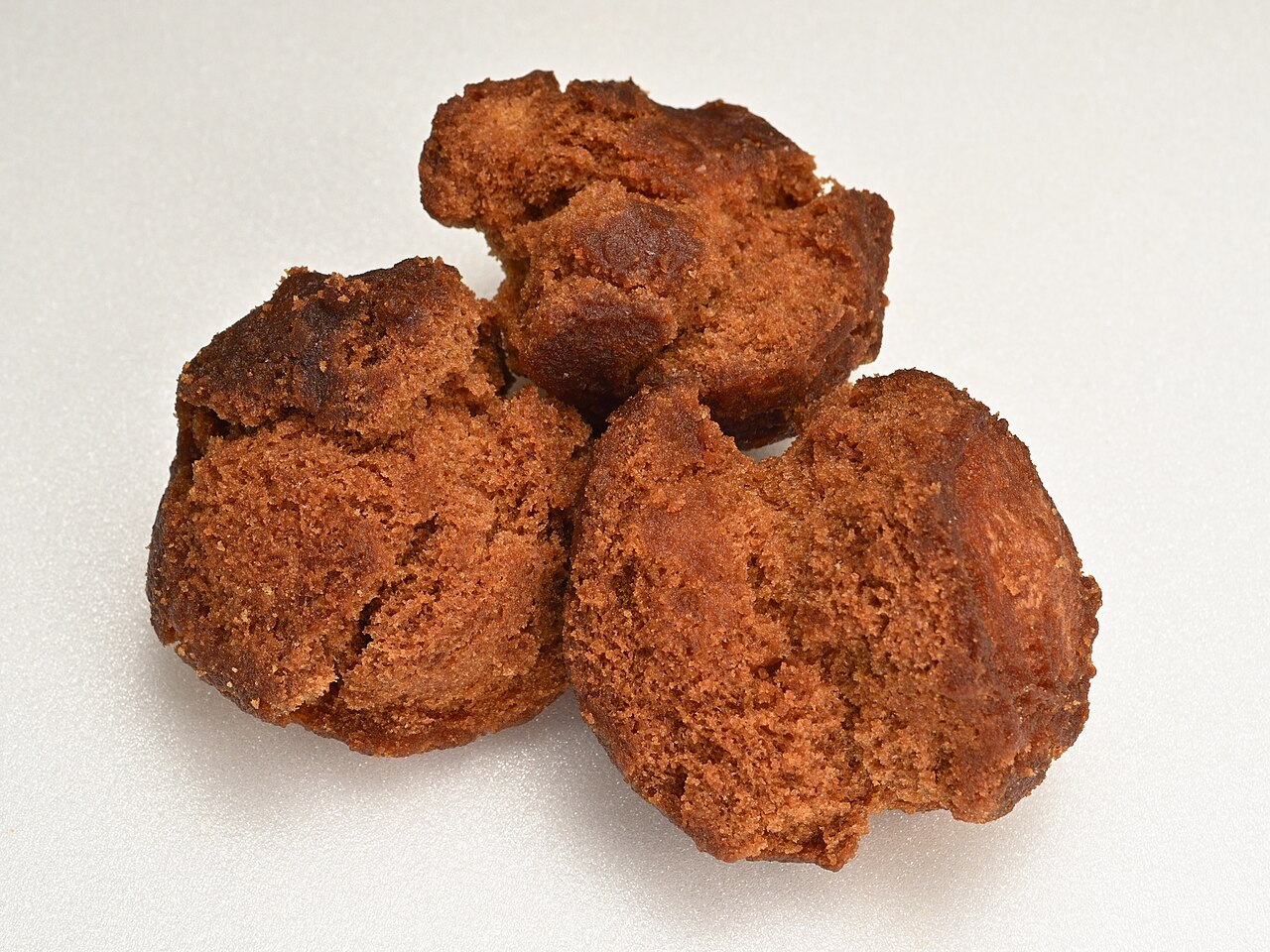
Sata andagi is the Okinawan doughnut — "sugar (sata) + oil (anda) + fried (agi)." When fried, one side splits open like a blooming flower, seen as a "smiling face" and a symbol of good luck. 100–200 yen each. Mozuku is brown seaweed served in vinegar — Okinawa produces 99% of Japan's supply. Hirayachi is an Okinawan flat pancake made with flour, eggs, and green onions, famous as "typhoon-day comfort food" when people can't leave home.
Drink and Indulge — From Awamori to Blue Seal
Awamori is Okinawa's indigenous distilled spirit, made from Thai rice and black koji mold. It's Japan's oldest distilled spirit with over 600 years of history. At 25–43% alcohol, it's aged 3+ years to become "kusu" (ancient spirit). Enjoy it on the rocks, with water, or with soda. 300–500 yen per glass at izakayas.
Orion Beer, born in Nago City in 1957, commands about 60% of Okinawa's beer market. Its light, crisp American lager style is perfect for the subtropical climate.
The dessert crown belongs to beni-imo tart (purple sweet potato tart), created in 1986 by Okashi Goten in Yomitan — Okinawa's No.1 souvenir ever since. Chinsuko is a traditional Ryukyu Kingdom court cookie made from flour, sugar, and lard. Blue Seal Ice Cream, established in 1948 on a US military base and sold to the public since 1963, is an Okinawan icon with 30+ flavors including beni-imo, salt cookie, and shikwasa citrus. The Makiminato flagship store in Urasoe is a must-visit.

Where to Eat — Makishi Public Market and Budget Guide
The starting point for any Okinawan food journey is Naha's First Makishi Public Market. Reopened in March 2023 as a modern 3-story building, its famous "mochi-age" system lets you buy fresh seafood on the 1st floor and have it cooked at 2nd floor restaurants (cooking fee: 500–1,000 yen). From colorful tropical fish to sea grapes to pig faces — you'll see every Okinawan ingredient in one place.
Budget guide: Snacks like sata andagi 100–500 yen / Soba or taco rice 600–1,000 yen / Set meals 800–1,500 yen / Izakaya dinner with awamori 2,000–5,000 yen. Three local meals a day will cost you just 3,000–5,000 yen.