In late February, while cold winds still sweep through most of Northeast Asia, cherry blossoms in Okinawa are already beginning to fall. Compared to mainland Japan, where the season does not start until late March, Okinawa's bloom arrives a full two months earlier. And these are not the pale-pink Somei-Yoshino seen on the mainland. Okinawa's cherry blossoms are kanhizakura (Cerasus campanulata) — deep magenta, bell-shaped flowers that hang downward and drop whole rather than scattering petal by petal.
.jpg)
What Is Kanhizakura — How It Differs from Mainland Cherry Blossoms
Kanhizakura (寒緋桜, Cerasus campanulata) is a cherry tree native to Taiwan, southern China, and Okinawa. The name means "cold crimson cherry" — a tree that blooms in the depths of winter. The Japan Meteorological Agency uses kanhizakura, not Somei-Yoshino, as the official blooming observation standard for Okinawa.
The biggest difference from mainland Somei-Yoshino is color and falling pattern. Somei-Yoshino petals — nearly white to pale pink — scatter individually in the wind, creating the poetic "sakura blizzard." Kanhizakura, by contrast, drops as a whole flower, calyx and all. This makes it more resilient to rain and wind, and the blooms can be enjoyed for over two weeks after reaching peak.
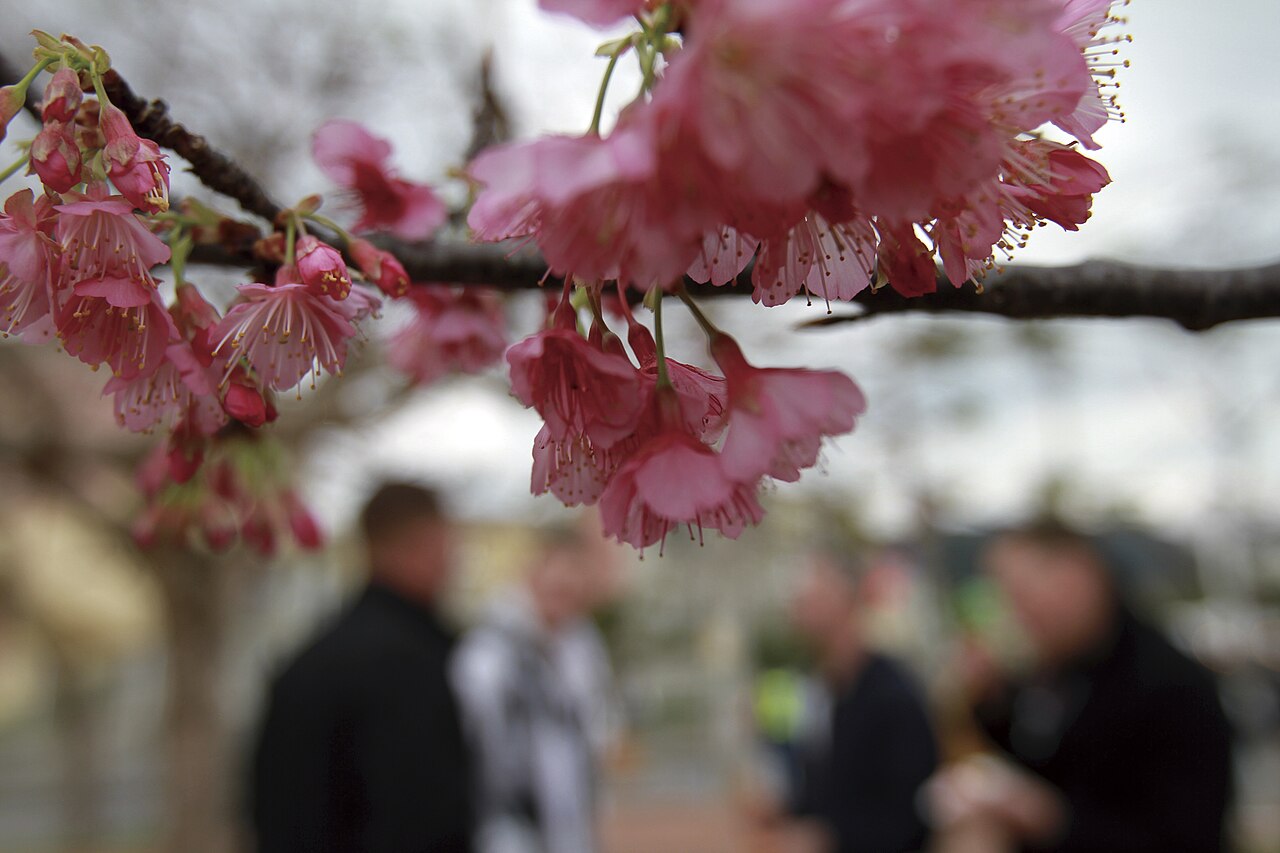
The color difference is striking. Kanhizakura is a deep magenta-crimson that contrasts dramatically against Okinawa's blue winter sky — a photographer's dream. The trees are also shorter (3 to 8 meters vs. Somei-Yoshino's 10 to 15 meters), making close-up viewing easy.
Top 3 Cherry Blossom Spots — Northern Okinawa
1. Mount Yaedake — 7,000 Trees, Okinawa's Largest
In Motobu Town, 453-meter Mount Yaedake has 7,000 kanhizakura trees lining 4 km of road from base to summit. The highlight is driving through a tunnel of cherry blossoms. From the summit, deep pink blooms frame the emerald sea of the Motobu Peninsula.
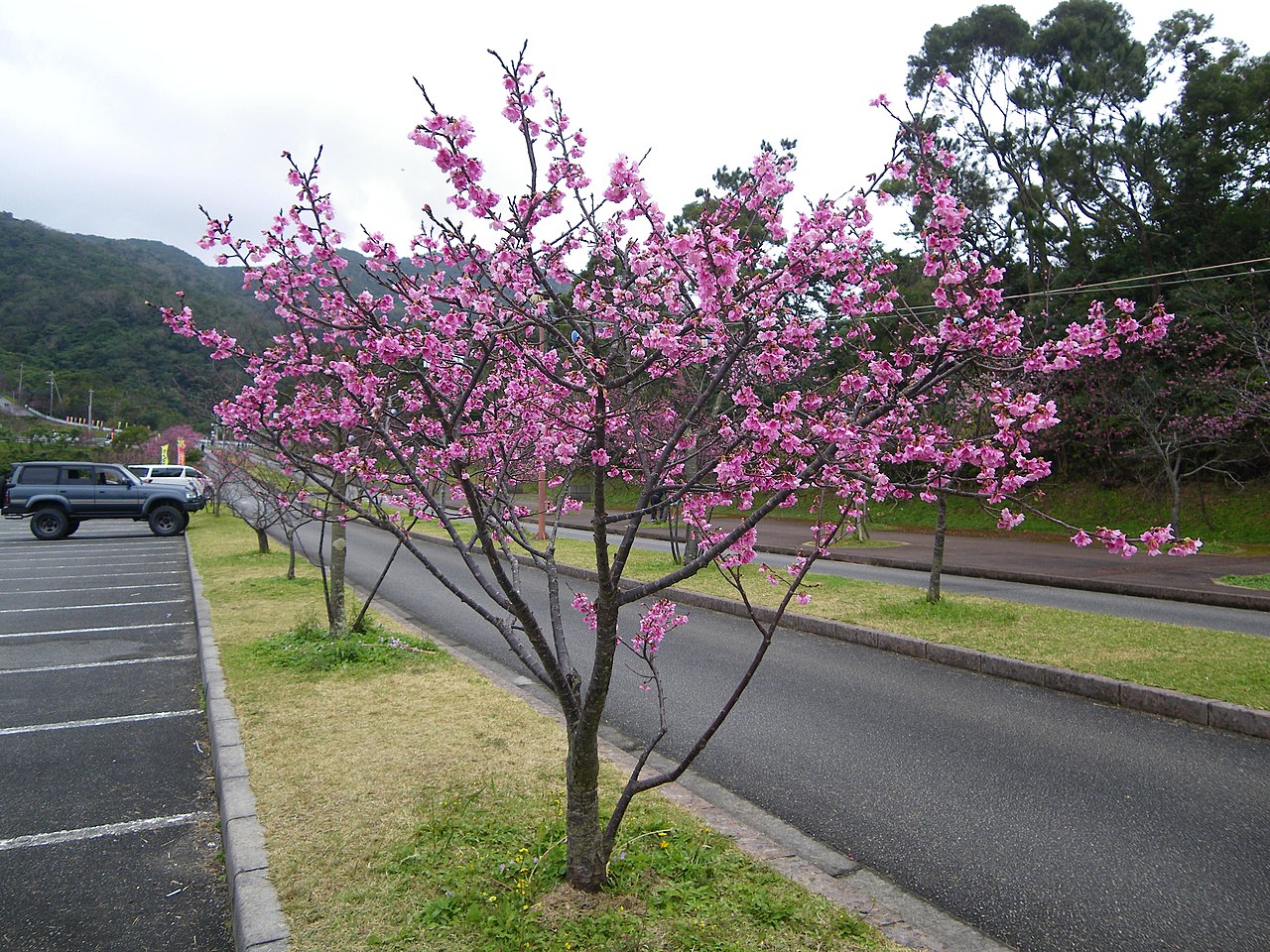
Parking: about 500 spaces (free). From Naha Airport: about 1 hour 40 minutes via the Okinawa Expressway. Only 10 minutes by car from Churaumi Aquarium, making it easy to combine both. Bloom period: mid-January to early February.
2. Nakijin Castle Ruins — UNESCO Heritage x 600 Trees
UNESCO World Heritage-listed Nakijin Castle has about 600 kanhizakura trees along its stone walls. Cherry trees flanking the stone staircase form a natural tunnel, and from the highest point, blossoms, ancient stone walls, and the East China Sea fill a single frame. Evening illumination (18:00-21:00) uses digital lighting to create a magical atmosphere.
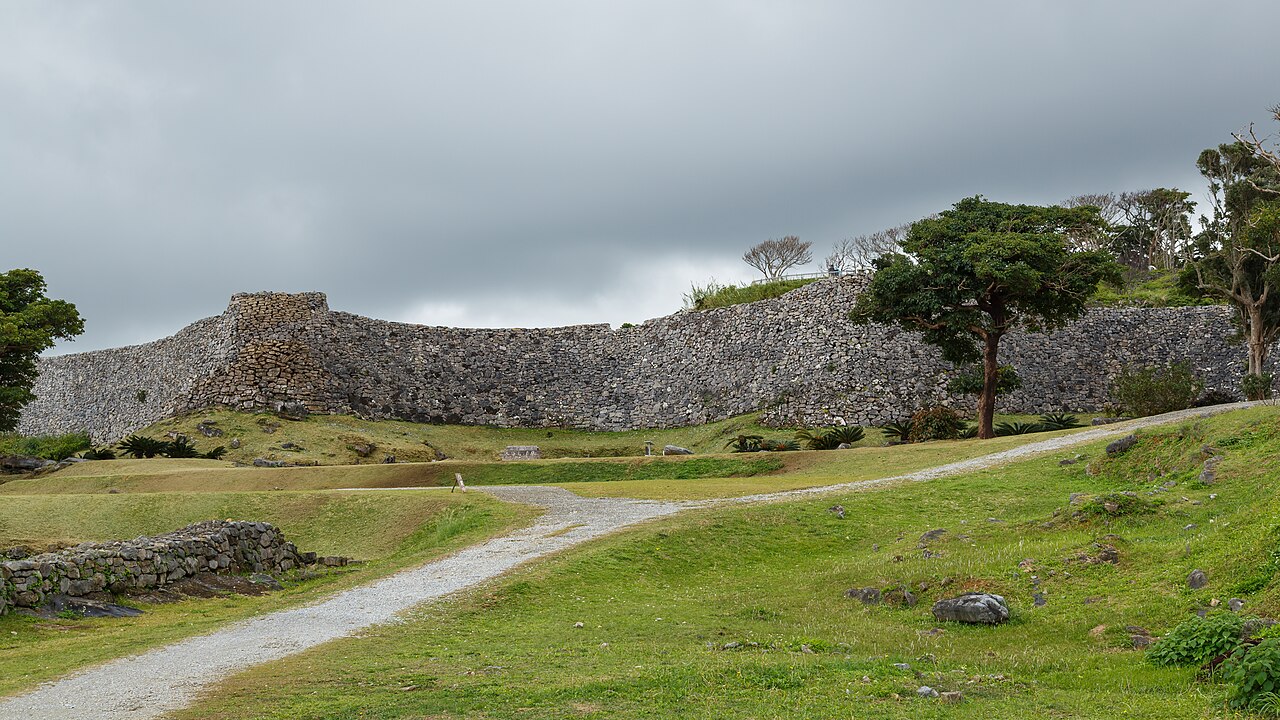
Admission: 1,000 yen for adults (during festival), 500 yen for junior/senior high, free for elementary and under. Parking: about 300 spaces. Bloom period: late January to mid-February.
3. Nago Castle Park — 20,000 Trees, Japan's Top 100 Cherry Blossom Sites
Nago Castle Park boasts about 20,000 kanhizakura trees, making it Okinawa's sole entry in "Japan's Top 100 Cherry Blossom Sites." A 2 km promenade winds through an entire mountainside awash in pink. The view of cherry blossoms backed by the emerald East China Sea is a uniquely Okinawan spectacle.

Admission: free. Lantern illumination during festival period (18:00-22:00). Parking: Nago Fishing Port with shuttle bus. Bloom period: late January to early February.
Cherry Blossoms in Naha — Southern Options
If your schedule does not allow a trip north, cherry blossoms can be enjoyed within Naha. Southern Okinawa blooms 2 to 3 weeks later than the north, making mid- to late February the best window.
4. Yogi Park — Naha's largest cherry blossom spot with about 400 kanhizakura trees lining the river running through the park. A 13-minute walk from Yui Rail Asato Station. The annual "Naha Sakura Matsuri" in mid-February features Eisa dance and folk song performances.
5. Sueyoshi Park — Naha's only park with remaining natural forest. About 1,000 kanhizakura trees and the nationally designated historic Sueyoshi Shrine. The Meteorological Agency's official cherry blossom observation tree is located here. A 2-minute walk from Yui Rail Shiritsu Byoin-mae Station.
6. Yaese Park — About 500 trees in southern Yaese Town. The observation deck offers panoramic views stretching to the Kerama Islands, and during the festival, a free foot bath and nighttime illumination (18:00-21:00) are available.
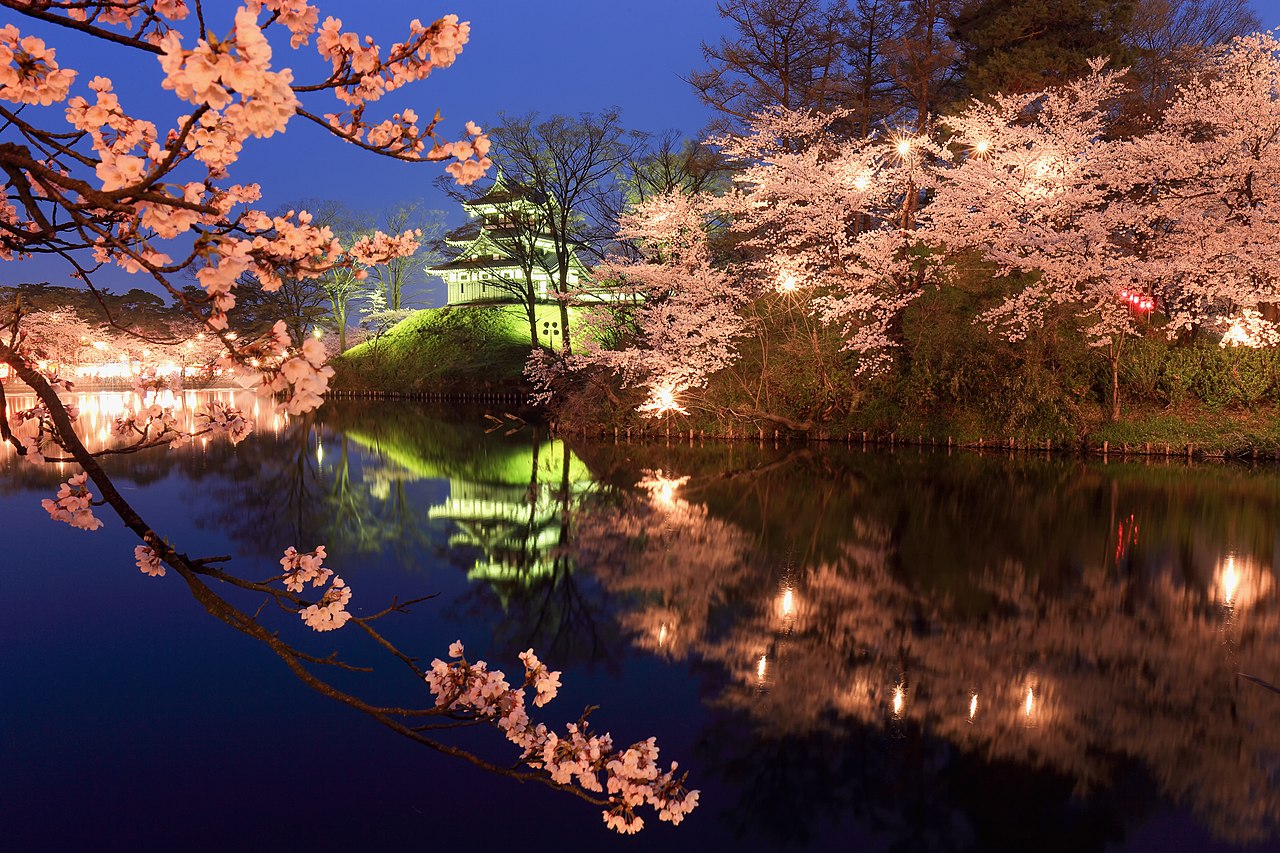
Cherry Blossom Festival Guide — 2026 Schedule

| Festival | Dates | Location | Admission | Highlights |
|---|---|---|---|---|
| Motobu Yaedake Sakura Matsuri | 1/17-2/8 | Mt. Yaedake | Free | Japan's earliest cherry festival, drive course |
| Yaese Sakura Matsuri | 1/29-2/8 | Yaese Park | Free | Free foot bath, night illumination |
| Nakijin Gusuku Sakura Matsuri | 1/31-2/8 | Nakijin Castle | 1,000 yen | World Heritage, digital light show |
| Nago Sakura Matsuri (63rd) | 1/31-2/1 | Nago Castle Park | Free | Parade, tuna carving show |
| Naha Chura Sakura Matsuri | 2/21-2/22 | Manko Park | Free | Naha's largest cherry event |
The Nago Sakura Matsuri marks its 63rd edition this year, having drawn 170,000 visitors in 2013. Popular events include the tuna carving show (2/1 at 11:00) at Nago Fishing Port and the ice sculpture contest on Nago Crossroads Main Street.
The Reversed Cherry Blossom Front — Why the North Blooms First
On the Japanese mainland, cherry blossoms progress from south (Kyushu, late March) to north (Hokkaido, May). In Okinawa, however, they move in the opposite direction — north to south. The secret lies in "dormancy breaking" (kyumin-daha).
Cherry trees form flower buds in summer and then enter dormancy. To break this dormancy, they need sustained exposure to temperatures below about 10 degrees Celsius. Once dormancy breaks, rising temperatures trigger blooming. On the mainland, "warming" is the trigger, so the warmer south blooms first. In subtropical Okinawa, however, the place that accumulates enough cold first blooms first.
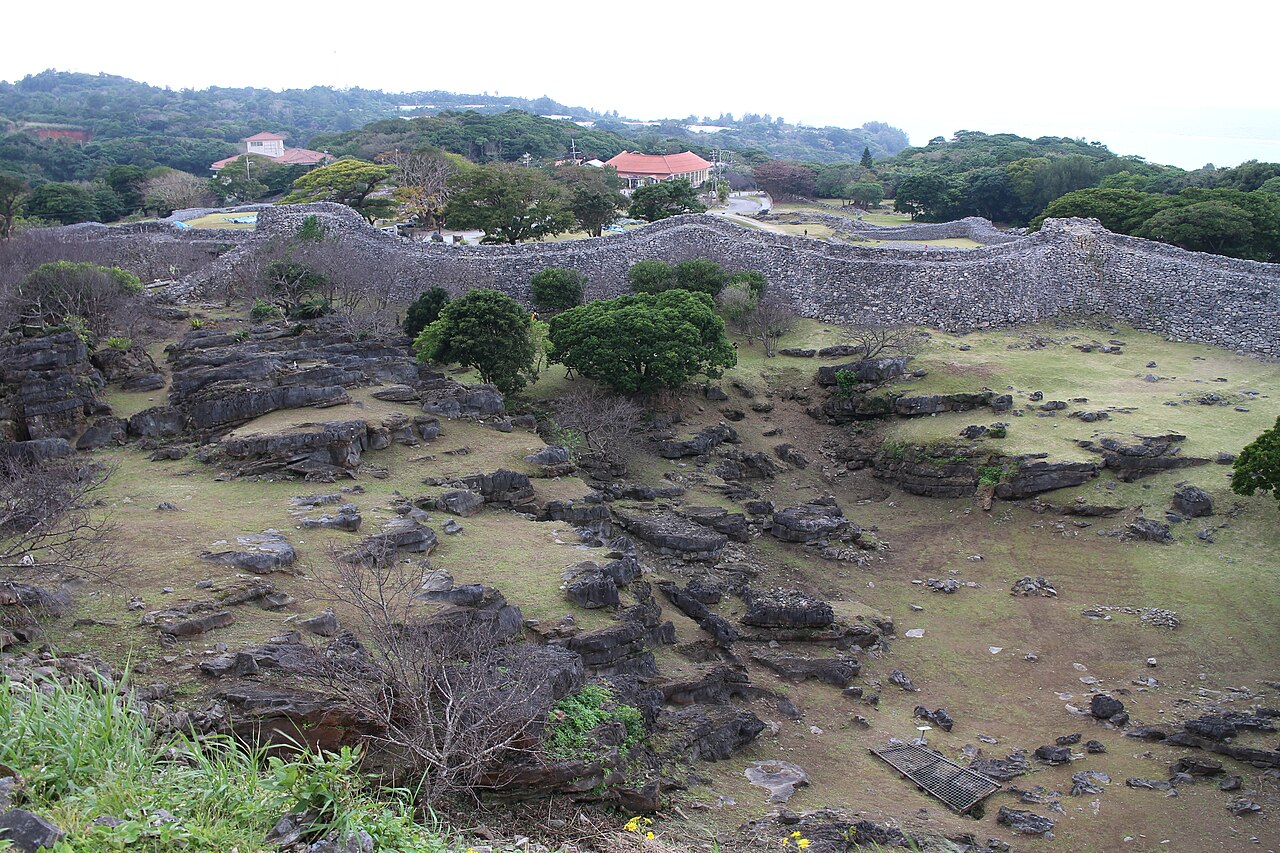
Mount Yaedake (453 m) and the Nakijin highlands experience sufficient cold in December-January, triggering bloom by mid-January. Meanwhile, low-lying, warm Naha accumulates cold slowly and does not reach full bloom until mid-February. The result is a 3 to 4-week gap across the prefecture.
Photography and Viewing Tips
Shoot from below — Since kanhizakura flowers hang downward in a bell shape, an upward angle best reveals their form. Backlighting against blue sky brings out the translucency of the petals.
Exposure compensation — The deep magenta of kanhizakura is more forgiving than pale Somei-Yoshino, but underexposing by -0.3 to -0.7 EV produces richer colors.
Best visiting hours — Early morning (before 9:00) offers fewer crowds and soft light. Midday provides the sharpest contrast against blue sky. Evening (18:00-21:00) is the time for Nakijin Castle and Yaese Park illumination.
Nakijin Castle best spot — The section where cherry trees form an arch over the stone staircase is the top photo spot. From the highest point, you can frame cherry blossoms, ancient stone walls, and the East China Sea in a single shot.
One-Day Cherry Blossom Driving Course
Okinawa's cherry blossom spots are concentrated in the north, making a rental car essential. Here is a model day trip from Naha.
08:00 Depart Naha via Okinawa Expressway to Kyoda IC
09:30 Mt. Yaedake — Drive the 4 km cherry tunnel, summit viewpoint (about 1 hour)
10:45 Churaumi Aquarium — 10 minutes from Yaedake (about 2 hours)
13:00 Okinawa soba lunch in Motobu — Try the legendary Kishimoto Shokudo or Yae Soba in Motobu, a soba heartland
14:00 Nakijin Castle — UNESCO stone walls and cherry blossoms (about 1 hour)
15:30 Kouri Island — Drive across Kouri Bridge, visit Heart Rock (about 1 hour)
17:00 Nago Castle Park — Promenade stroll, sunset with cherry blossoms (about 1 hour)
18:30 Dinner in Nago before returning to Naha
Local Tip
When driving up Yaedake, the cherry blossoms are on the driver's side going uphill (base to summit). On the way down they are on the opposite side, so savor the view on the ascent. On weekends, the summit parking lot fills quickly — arrive before 9:00 AM. Nakijin Castle gets extremely crowded on festival weekends, so visit on a weekday if possible.